
Hotel SOPs: housekeeping and front office, written out
A hotel SOP is a short procedure for one repeated task — cleaning a checkout room, handling a do-not-disturb sign on day two, checking a guest in without reading the room number aloud. A mid-size hotel runs on 40 to 60 of them. The five below cover the tasks that brand audits and guest complaints come back to most often, with the timings and the order of work spelled out.
Download the hotel SOP pack (Word)
Which SOPs a hotel operation needs
The full set, with when each one is used, what it leaves behind as a record, and the rule it answers to. The ones a hotel gets asked about first are written out in full below.
| Procedure | When | Record | Basis |
|---|---|---|---|
| Checkout room cleaning | Every departure | Room status in the PMS; supervisor check | Brand standard; OSHA housekeeping ergonomics guidance |
| Stayover service | Every occupied room daily, unless opted out | Room status | Brand standard |
| Do-not-disturb and welfare check | Every DND past the set time | DND log | Brand policy; duty-of-care |
| Lost property | Every item found | Lost property log | Local law on found property; brand standard (90 days is common) |
| Check-in and key issue | Every arrival | Registration card; key log | PCI DSS for card data; local ID rules |
| Cash handling and float | Every shift | Float sheet; drop log | Your finance policy |
| Chemical handling in housekeeping | Every room | SDS at the store | OSHA 1910.1200 (HazCom); UK COSHH |
| Bed bug response | Any report or sighting | Pest log | Pest contractor protocol |
| Fire alarm and evacuation | Every alarm | Drill record | Local fire code; NFPA 101 |
| Pool and spa checks | Daily | Chemical log | Local health code |
The procedures, written out
These are general procedures. Your equipment, your products, your site rules and your local law come first — change the names, the limits and the forms to match, then have the right person approve each one before it is used.
Cleaning a checkout room
| Area | Guest floors | Done by | Room attendant; floor supervisor inspects |
Purpose. Return a departed room to brand standard, in the time allowed, in an order that is safe and does not spread dirt from the bathroom to the bed.
Scope. Standard rooms after checkout. Suites and deep cleans have their own task sheets. Most hotels allow 25 to 30 minutes for a checkout room and 15 to 20 for a stayover.
Safety.
- Gloves for the bathroom and for handling used linen. Change gloves before you touch clean linen.
- Never mix chemicals. Spray away from your face. The SDS for every product is in the housekeeping store.
- Prop the door with the cart, not a wedge, so you can see the corridor and the corridor can see you.
- Look before you lift: check under the bed and in the bin for needles, glass and blades. Use the sharps tool, never your hand.
| Step | Action | Key point / warning |
|---|---|---|
| 1 | Knock three times, announce "Housekeeping", wait 10 seconds, knock again, then enter with the door propped and the cart across it. | Guest still inside: apologise, leave, update the status and come back later. |
| 2 | Open the curtains and switch on every light. Check each one works. Note faults on the maintenance slip. | Report, do not fix. |
| 3 | Strip the bed and collect towels into the linen bag. Check the bed, drawers, safe, wardrobe and bathroom for guest property. | Anything found goes to lost property today, not at the end of the week. |
| 4 | Collect rubbish. Rinse and reset the bin liner. Take glasses and cups to the cart for washing — do not wash them in the bathroom basin. | Glassware washed in a guest basin is a repeat audit failure. |
| 5 | Spray the bathroom: toilet bowl, basin, shower. Leave the chemical to work for the contact time on the label while you make the bed. | Contact time is usually 5 to 10 minutes. Wiping at once cleans; it does not disinfect. |
| 6 | Make the bed with fresh linen. Bend at the knees to lift the mattress corner, and use the mattress lifter if the hotel has one. | Bed-making is the biggest cause of back injury in housekeeping. |
| 7 | Dust and wipe high to low: lamps, headboard, desk, TV, remote, phone, kettle, mirror frames, skirting. | The phone and the remote are the two items guests test with a wipe. |
| 8 | Change gloves. Clean the bathroom in this order with colour-coded cloths: mirror and shelves, basin, shower and bath, toilet last — outside then inside. | Red cloth and red brush for the toilet only. Blue for the basin and general. Yellow for the shower. |
| 9 | Restock to the par list: towels, toiletries, tea tray, stationery, water. Fold towels to standard. | |
| 10 | Vacuum from the far corner to the door. Set the AC to the standard temperature, curtains to standard, lights off. | |
| 11 | Final look from the doorway: anything out of place? Close the door. Update the room status to "clean, to be inspected". | The supervisor's inspection is a separate step. A room is not ready until it passes. |
Record. Room status in the property management system; supervisor inspection on the floor sheet; maintenance slips for faults.
Basis. Brand housekeeping standard; OSHA guidance on hotel housekeeping ergonomics; the SDS for each chemical.
Do-not-disturb sign and guest welfare check
| Area | Guest floors | Done by | Room attendant reports; floor supervisor or duty manager acts |
Purpose. Respect a guest's privacy without leaving a room unchecked for so long that a welfare problem, a safety hazard or damage goes unnoticed.
Scope. Any room with the DND sign out, the DND light on, or no answer at the set time. Not rooms on a pre-arranged no-service request.
Safety.
- Never enter a DND room alone. The welfare check is always two people, and one of them is a supervisor or manager.
| Step | Action | Key point / warning |
|---|---|---|
| 1 | Room attendant: record the DND room number and time on the floor sheet. Do not knock. Move on. | |
| 2 | Return at the end of the section. If the sign is still out, leave the "we respected your privacy" card with the number for housekeeping. | Brand cards vary; the point is a timestamped contact attempt. |
| 3 | Supervisor: at 2 pm (or the hotel's set time), call the room. No answer: note the time. | |
| 4 | If the DND has been out for 24 hours with no contact — no call, no key use, no front-desk interaction — the duty manager does a welfare check. | Check key-card activity and the restaurant posting first. Most 24-hour DNDs are a guest who went to a conference. |
| 5 | Welfare check: two staff, one a manager. Knock, announce, wait, enter with the master key. Do not touch guest property. Check that the guest is safe and the room is safe. | Medical emergency: call emergency services, then the general manager. |
| 6 | Record the check in the DND log and in the guest profile: time, who entered, what was found. |
Record. DND log by room and date; duty manager's note of each welfare check.
Basis. Brand policy. Many groups moved to a 24-hour mandatory check after 2017.
Lost property
| Area | All departments | Done by | Finder; housekeeping office logs and stores |
Purpose. Get a guest's property back to them, and protect the hotel and the finder from any claim that it was taken.
Scope. Any item left by a guest in a room, public area, restaurant or vehicle.
Safety.
- Medicines, needles and anything unknown in a bag: do not search bags. Log them sealed, as found.
| Step | Action | Key point / warning |
|---|---|---|
| 1 | Do not move the item from where it was found until you have noted the room or location. | |
| 2 | Take the item to the housekeeping office the same day, in a sealed bag. Fill in the lost property tag: date, time, where found, description, your name. | A watch is "metal watch, black strap", not "Rolex". Describe; do not value. |
| 3 | Housekeeping office: log it with a reference number. Photograph it. Store valuables (cash, cards, passports, electronics, jewellery) in the safe; everything else on the dated shelf. | Passports and ID are reported to the front desk at once; the guest may still be in the building. |
| 4 | Front desk: check whether the guest is in-house or has departed, and contact them. Note every contact attempt on the log. | |
| 5 | Return in person against ID and a signature, or ship at the guest's cost after written confirmation of the address. | Never confirm a guest's stay or room to a third party who calls asking about an item. |
| 6 | Unclaimed items are disposed of after 90 days (or your local legal period): charity, the finder, or destruction for ID documents and cards. | Record the disposal with the manager's signature. |
Record. Lost property log, kept for 2 years. Tag stays with the item.
Basis. Local law on found property varies; 90 days is the most common hotel standard.
Check-in and key issue
| Area | Front desk | Done by | Receptionist |
Purpose. Get the right guest into the right room with the right rate, without giving anyone else a way in.
Scope. Every arrival, including walk-ins and third-party bookings.
Safety.
- Card details are never written down, photographed or read back aloud. Card payments go through the terminal only. Registration cards with card numbers on them are a PCI failure.
| Step | Action | Key point / warning |
|---|---|---|
| 1 | Greet, ask the name, and find the reservation. Confirm the dates and room type with the guest before you say anything about the rate. | |
| 2 | Ask for photo ID where the law or the hotel requires it. Check that the name matches the booking. | Do not photocopy ID unless the law requires it; if you do, store the copy under the hotel's data rules. |
| 3 | Take the payment guarantee on the terminal. Pre-authorise for room and incidentals as per policy. | |
| 4 | Programme the keys for the room and the departure date. Write the room number on the key folder — never say it aloud. | Point to the number and say "your room is on the fourth floor". Anyone within earshot now knows where the guest sleeps if you say it. |
| 5 | Explain breakfast, Wi-Fi, checkout time and the lift. Offer help with luggage. | |
| 6 | Replacement keys: ID or a correct answer to a profile question (address, phone) before a new key is cut. Deactivate the lost key. | A caller asking for a key "for my partner in room 312" gets nothing until the registered guest confirms in person. |
| 7 | Update the arrival in the PMS and file the signed registration card. |
Record. Signed registration card; key log for replacements; PMS arrival record.
Basis. PCI DSS v4.0 for card data; local hotel registration law (ID requirements differ by country).
Bed bug report
| Area | Guest floors | Done by | Room attendant reports; executive housekeeper and pest contractor act |
Purpose. Contain a suspected bed bug case in one room, deal with the guest well, and stop it spreading through linen and carts.
Scope. Any guest report of bites or any sighting of insects, dark spotting on the mattress seams, or shed skins.
Safety.
- Do not spray anything yourself. Household insecticides scatter the infestation into neighbouring rooms.
| Step | Action | Key point / warning |
|---|---|---|
| 1 | Take the report seriously and calmly. Do not argue about whether it is bed bugs. Apologise and move the guest to a room on a different floor, not next door. | Offer laundering of the guest's clothes. Bag them at the room door. |
| 2 | Put the room out of order in the PMS. Lock it. Nothing — linen, cart, vacuum — leaves the room until the contractor has inspected it. | Linen stripped and carried down the corridor is how one room becomes six. |
| 3 | Inspect the mattress seams, headboard, bed frame and skirting with a torch. Photograph what you find. Do not strip the bed. | |
| 4 | Call the pest contractor the same day. Inspect the rooms on either side and above and below. | |
| 5 | After treatment: launder all linen from the room on the hottest cycle, steam the mattress and headboard if the contractor advises, and keep the room out of order until the follow-up inspection clears it (usually 7 to 14 days). | |
| 6 | Record the case on the pest log: room, date reported, action, contractor visit, clearance date. Brief the floor team without naming the guest. |
Record. Pest log; out-of-order record; contractor report.
Basis. Your pest contractor's protocol; EPA and local public-health guidance on bed bugs.
Where hotel SOPs go wrong
The checkout room is cleaned in the wrong order
Bathroom first, then the bed, with the same gloves, is how the toilet brush ends up on the pillow in a swab test. The order in the SOP — strip, spray the bathroom, make the bed, dust, then clean the bathroom last with fresh gloves — exists because of the chemical contact time and because dirt should move one way.
Room numbers are said aloud at the desk
Receptionists are trained on it, and it still happens on a busy Friday. The fix that lasts is a folder with the number written inside and the habit of pointing to it. Mystery-shop it.
The DND policy is 'use your judgement'
Judgement is what every manager used before a guest was found after three days. A set hour for the call and a 24-hour line for the two-person welfare check takes the decision away from the person on shift.
Lost property is described by value, not appearance
"Gold ring" on a tag is a dispute waiting to happen when the guest says it was platinum. Describe what you see. Photograph it. Lock up anything you would not leave on a desk.
The SOP exists, the team was never shown it
Housekeeping has the highest turnover in the building and the most languages. A new attendant learns from whoever trained them, in whatever order they use. Showing the checkout sequence once, as a video in the attendant's language, is the cheapest standardisation there is.
Getting housekeeping and the desk to follow them
Print the checkout sequence on the cart. Keep the chemical contact times on the bottle holder, not in the office. Use the floor sheet for the DND times so the supervisor sees them without asking. For the sequence itself — the order of the room — a 90-second video shown on day one in the attendant's language does what a 30-minute shadow shift does not: everyone sees the same order. The slips, trips and falls refresher and the chemical labels talk cover the two injuries housekeeping gets most.
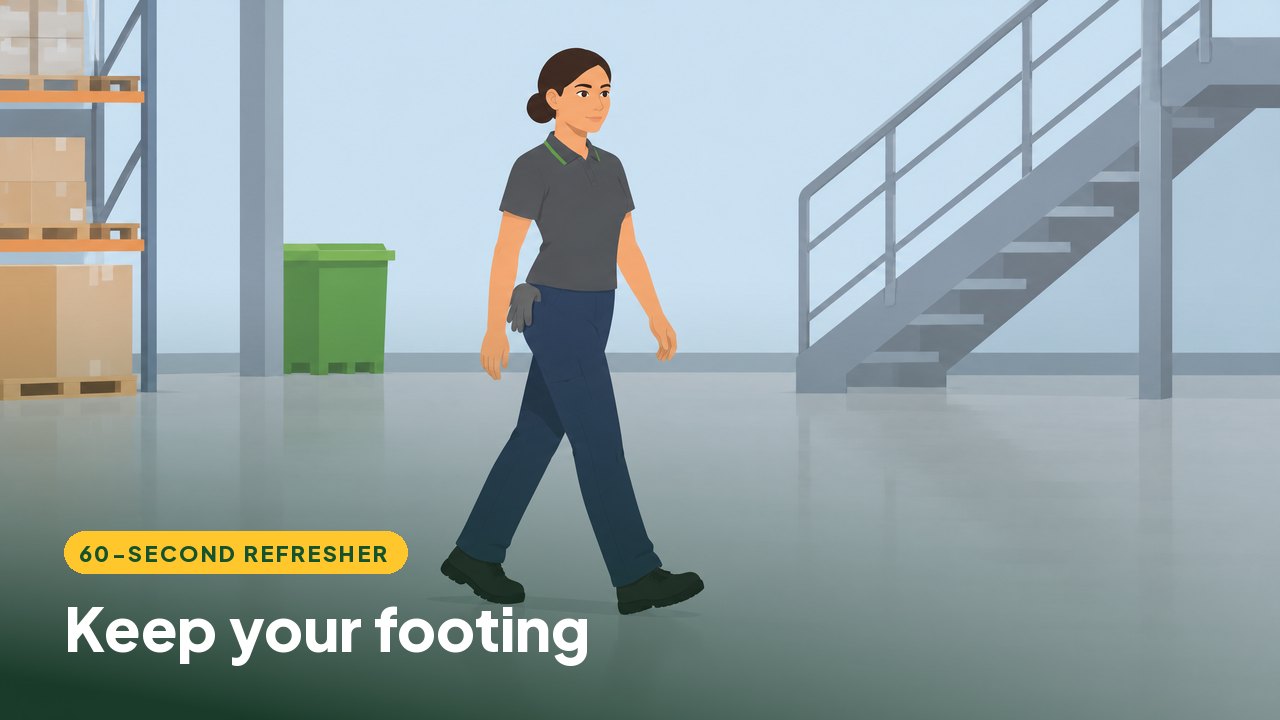 1:04
1:04Slips, trips and falls
 2:23
2:23Hazard communication
 2:21
2:21Fire extinguishers (PASS)
Questions
How long should a room attendant take per room?
Most hotels budget 25 to 30 minutes for a checkout room and 15 to 20 for a stayover, which gives a section of 14 to 16 rooms on an 8-hour shift with breaks. Luxury properties allow longer; economy brands less. The number matters less than whether the inspection pass rate holds at the number you set.
What is the colour-coding for cleaning cloths?
The most common scheme, from the British Institute of Cleaning Science: red for toilets and urinals, yellow for basins and bathroom surfaces, blue for general low-risk areas such as desks and furniture, green for kitchens and food areas. Any scheme works if everyone uses the same one and the cloths are laundered separately.
Do we have to do a welfare check on a DND room?
No law requires it in most places, but after several incidents the major groups made a 24-hour check mandatory in their standards, and a court would ask what a reasonable hotel does. Set a time, log it, and do it with two people.
How long do we keep lost property?
Ninety days is the usual hotel standard. Some countries set a legal period for found property; check yours. Keep the log longer than the item.
Can I use these for a B&B or a small hotel?
Yes. Drop the PMS references and the supervisor inspection if it is you doing both jobs, and keep the order of work, the DND rule and the key rule.
Sources
Get one of your hotel SOPs as a free video
Send one procedure. We send back a 60-second branded video with a quiz, in your crew's languages — free, no obligation.