
Restaurant SOPs: the procedures every kitchen runs on
A restaurant SOP is a one-page procedure for one routine kitchen task: receiving a delivery, taking fridge temperatures, cooling a stock, taking an allergen order, closing the line. Most kitchens need about a dozen. The five below are the ones a health inspector will ask about first, written in full so you can copy them into your own template and change the numbers that are different at your site.
Download the restaurant SOP pack (Word)
Which SOPs a restaurant operation needs
The full set, with when each one is used, what it leaves behind as a record, and the rule it answers to. The ones a restaurant gets asked about first are written out in full below.
| Procedure | When | Record | Basis |
|---|---|---|---|
| Receiving deliveries | Every delivery | Receiving log | FDA Food Code 3-202.11 (temperatures on receipt) |
| Fridge, freezer and hot-hold temperatures | Twice a shift | Temperature log | Food Code 3-501.16 (41°F / 135°F) |
| Cooling cooked food | Every batch that is not served at once | Cooling log | Food Code 3-501.14 (135→70→41°F) |
| Reheating for hot holding | Every reheat | Temperature log | Food Code 3-403.11 (165°F within 2 hours) |
| Date marking and FIFO | Every container opened or prepared | Labels | Food Code 3-501.17 (7 days at 41°F) |
| Allergen orders | Every allergen request | Ticket flag | FASTER Act 2021 (US, 9 major allergens); Natasha's Law (UK, PPDS labels) |
| Handwashing | Before food, after anything else | None — but observed | Food Code 2-301.12 (20 seconds) |
| Cleaning and sanitising surfaces | Between tasks, every 4 hours in use | Cleaning schedule | Food Code 4-602.11, 4-501.114 (sanitiser strength) |
| Sick staff | Before every shift | Health declaration | Food Code 2-201.11 (exclude vomiting, diarrhoea, jaundice) |
| Opening and closing | Daily | Checklist | Your own standard |
The procedures, written out
These are general procedures. Your equipment, your products, your site rules and your local law come first — change the names, the limits and the forms to match, then have the right person approve each one before it is used.
Receiving a food delivery
| Area | Back door / dry store | Done by | Receiving cook or manager on duty |
Purpose. Accept only food that is safe, at the right temperature, and that matches the order — and refuse the rest before the driver leaves.
Scope. Every delivery of food, drink and packaging. Not deliveries of equipment or cleaning chemicals (see the chemical SOP).
Safety.
- Cut-resistant glove for opening boxes. Lift cases with your legs, not your back; cases over 20 kg / 45 lb are a two-person lift.
- Keep the back door closed between deliveries. An open door is a pest entry and a security gap.
| Step | Action | Key point / warning |
|---|---|---|
| 1 | Check the delivery note against the purchase order before anything comes off the truck. | Wrong supplier or no PO: do not accept it. Call the manager. |
| 2 | Probe chilled items first, while they are still on the truck: insert the probe between two packs, not into the food. | Chilled TCS food must be at 41°F (5°C) or below. Frozen food must be frozen hard, no ice crystals on the inside of the pack. |
| 3 | Check packaging: dented or swollen cans, torn bags, wet cardboard, broken seals, pest signs. | Reject the damaged case, not the whole delivery. |
| 4 | Check dates. Reject anything past its use-by date or with less shelf life than your order specification. | |
| 5 | Count each line against the delivery note. Write any shortage, rejection or temperature on the note before the driver signs. | A note signed clean cannot be disputed later. |
| 6 | Move chilled and frozen goods into storage within 15 minutes. Dry goods can wait; cold goods cannot. | Raw meat and poultry on the bottom shelves, ready-to-eat above. |
| 7 | Record the delivery on the receiving log: supplier, time, items probed, temperatures, action taken. | Keep shellfish tags with the product and file them for 90 days after the last shellfish from that container is used (Food Code 3-203.12). |
Record. Receiving log, kept 90 days (longer if your HACCP plan says so).
Basis. FDA Food Code 2022, 3-202.11 and 3-203.12.
Taking fridge, freezer and hot-hold temperatures
| Area | All kitchen stations | Done by | Opening cook (first round) and closing cook (second round) |
Purpose. Find a failing fridge or holding unit before the food in it becomes unsafe.
Scope. Every walk-in, reach-in, under-counter fridge, freezer, bain-marie, hot cabinet and salad well in use.
Safety.
- Freezer doors: never let the door close behind you in a walk-in. Check the inside release works on the first round of the day.
| Step | Action | Key point / warning |
|---|---|---|
| 1 | Use the probe thermometer, not the unit's display. Clean the probe with a sanitiser wipe before each unit. | Unit displays measure air; the probe measures food. They can differ by 5°F. |
| 2 | Chilled units: probe the warmest likely item — the one nearest the door or the top shelf. Reading must be 41°F (5°C) or below. | |
| 3 | Freezers: check that product is frozen hard. Record the display reading. | 0°F (−18°C) is the target; frozen solid is the rule. |
| 4 | Hot holding: probe the thickest part of each pan. Reading must be 135°F (57°C) or above. | Stir soups and sauces before probing. |
| 5 | Write every reading on the log with the time and your initials. Do not round and do not pre-fill. | An inspector can tell a log filled in at 10 pm for the whole day. |
| 6 | Out of range: move the food to a working unit, write the corrective action on the log, and tell the manager. Food found above 41°F for more than 4 hours, or you cannot prove how long, is thrown away. | Hot food below 135°F for more than 4 hours is thrown away. Under 4 hours it can be reheated to 165°F once. |
| 7 | Calibrate the probe once a week in iced water: it should read 32°F (0°C). Adjust or replace if it is more than 2°F out. | Write the calibration on the back of the log. |
Record. Temperature log, two rounds a day, kept for 90 days.
Basis. FDA Food Code 2022, 3-501.16 and 4-502.11.
Cooling cooked food
| Area | Prep kitchen | Done by | Cook who made the batch |
Purpose. Get cooked food through the temperature range where bacteria grow fastest, quickly enough that it stays safe to serve later.
Scope. Any cooked food that will be chilled and served later: stocks, sauces, rice, cooked meats, beans, soups.
Safety.
- Hot stock pots: two people to lift pots over 10 litres. Never carry hot liquid above waist height.
| Step | Action | Key point / warning |
|---|---|---|
| 1 | Start the clock when the food comes off the heat, not when it goes into the fridge. | Write the start time on the cooling log. |
| 2 | Split the batch: shallow pans no deeper than 2 inches (5 cm) for solids, 4 inches for liquids. Loosely covered. | A full 20-litre stock pot in a walk-in takes a night to cool — and stays in the danger zone for most of it. |
| 3 | Use an ice bath, ice paddle or blast chiller for liquids. Stir every 15 minutes. | |
| 4 | Probe at the 2-hour mark. The food must be at 70°F (21°C) or below. | If it is not: reheat it to 165°F and start the cooling again, once. If it misses twice, throw it away. |
| 5 | Probe again at the 6-hour mark from the start. The food must be at 41°F (5°C) or below. | |
| 6 | Cover, label (name, date made, use-by), and store. Record both readings and times on the cooling log. | Use-by is 7 days from the day it was made, counting that day as day 1. |
Record. Cooling log per batch: start time and temperature, 2-hour reading, 6-hour reading, initials.
Basis. FDA Food Code 2022, 3-501.14 and 3-501.17.
Taking and cooking an allergen order
| Area | Front of house and line | Done by | Server, expediter, line cook |
Purpose. Serve a guest with a food allergy a meal that does not contain the allergen — and be sure of it, not fairly sure.
Scope. Any guest who says they have an allergy or intolerance, or asks what is in a dish. Not dietary preferences (vegan, halal), which have their own SOP.
Safety.
- An allergic reaction is a medical emergency. If a guest shows signs — swelling, breathing trouble, hives — call emergency services first and the manager second.
| Step | Action | Key point / warning |
|---|---|---|
| 1 | Server: ask which allergen, and whether it is an allergy or an intolerance. Repeat it back to the guest. | Never guess what is in a dish. Use the allergen matrix or ask the kitchen. |
| 2 | Write the allergen on the ticket in the allergen field and say it aloud when you hand the ticket over: "Table 6, allergen, tree nuts." | Verbal plus written. One of them gets missed; both do not. |
| 3 | Expediter: flag the ticket (coloured clip or marker) and tell the station cooking it. | |
| 4 | Cook: wash hands, change gloves, use the clean allergen board and a clean set of utensils from the allergen kit. Cook in a clean pan — not the pan from the last order. | The fryer is the usual failure. Shared fryer oil carries gluten, fish and shellfish into everything cooked in it. |
| 5 | Check every component against the recipe card and the allergen matrix, including garnishes, sauces and the bread. | Pre-made sauces and dressings hide the allergen most often: soy, dairy, mustard, sesame. |
| 6 | Plate on a marked plate or with an allergen flag. The expediter checks the ticket against the plate before it leaves the pass. | |
| 7 | Server: carry it separately and tell the guest: "This is the tree-nut-free dish." | Do not stack it with other plates. |
Record. Ticket with the allergen written on it, kept with the day's orders. Allergen matrix reviewed every time a recipe or supplier changes.
Basis. US: FASTER Act 2021 (milk, eggs, fish, shellfish, tree nuts, peanuts, wheat, soy, sesame). UK: Food Information Regulations 2014 (14 allergens) and Natasha's Law for pre-packed-for-direct-sale food.
Closing the kitchen
| Area | Whole kitchen | Done by | Closing cook; manager on duty signs off |
Purpose. Leave the kitchen clean, safe and ready, so the opening cook starts with food that is in date and equipment that works.
Scope. End of the last service each day.
Safety.
- Turn off gas at the appliance and check the pilot lights. Fryers: oil must be below 100°F (38°C) before draining or filtering.
- Mix sanitiser at the strength on the label and test it with a strip: chlorine 50–100 ppm, quaternary ammonium at the label strength (usually 150–400 ppm). Stronger is not cleaner; it leaves residue on food surfaces.
| Step | Action | Key point / warning |
|---|---|---|
| 1 | Label and date everything going into the fridge. Throw away anything past its use-by date or with no label. | No label means no history. It goes. |
| 2 | Wrap and store raw meat on the bottom shelves, ready-to-eat on top. Nothing on the fridge floor. | |
| 3 | Clean and sanitise all food-contact surfaces: wash, rinse, sanitise, air dry. Boards, tables, slicer, can opener, blender. | The can opener blade and the slicer guard are the two an inspector swabs. |
| 4 | Empty, clean and sanitise the ice machine scoop holder. Scoop stored handle-up, outside the ice. | |
| 5 | Sweep and mop under the line and behind equipment on wheels. Pull it out; do not mop around it. | |
| 6 | Take out rubbish and recycling. Lids on the outside bins. Clean the bin area. | Open bins are the first thing a pest contractor will tell you about. |
| 7 | Take the closing temperature round (see the temperature SOP) and record it. | |
| 8 | Switch off and check: gas, fryers, hoods, dish machine drained, lights. Lock the back door. | |
| 9 | Manager walks the kitchen with the closing checklist and signs it. | Unsigned checklist: the close did not happen. |
Record. Closing checklist signed by the closing cook and the manager, kept 30 days.
Basis. Your own standard, with cleaning frequencies from FDA Food Code 4-602.11.
Where restaurant SOPs go wrong
The temperature log is filled in from memory
Two logs in the same handwriting, all readings 38°F, filled in at close. Inspectors see this every week and treat the whole log as missing. The fix is not a stricter rule; it is a probe at each station and a round that takes four minutes, done by the person opening and the person closing.
Cooling starts when the pot reaches the walk-in
A stock pot that comes off the heat at 3 pm and is put in the walk-in at 4:30 has already used most of its two hours. Shallow pans and an ice paddle are cheaper than a blast chiller and work for most kitchens. The clock starts at the stove.
Allergen orders are safe at the pass and fail at the fryer
Everything is done right until the fries go into the same oil as the battered fish. A separate fryer, or a clear rule that allergen orders get oven-baked fries, closes the gap. Put it on the recipe card, not in a briefing.
Date labels say when it was opened, not when it must go
A label with only an open date makes every cook do the arithmetic. Label with the use-by date. If your kitchen uses day dots, the dot is the day it goes, and anything without a dot goes now.
The SOP is in the office, in English, in a binder
The people doing the closing are the youngest and most recently hired, often working in their second language. A procedure they have not read is not a procedure. Print the steps at the station, and show the task once in their language.
Getting the kitchen to follow them
Most of these procedures are five to nine steps. That is short enough to print and laminate at the station where the task happens: receiving log by the back door, cooling log on the prep fridge, the allergen steps at the pass. For a crew that changes often, a one-minute video of the task in Spanish, Hindi or Nepali beats a reread of the binder, and the quiz at the end tells you who got it. The food safety talk covers the handwashing, temperature and sick-staff rules in three minutes and comes with a sign-off sheet.
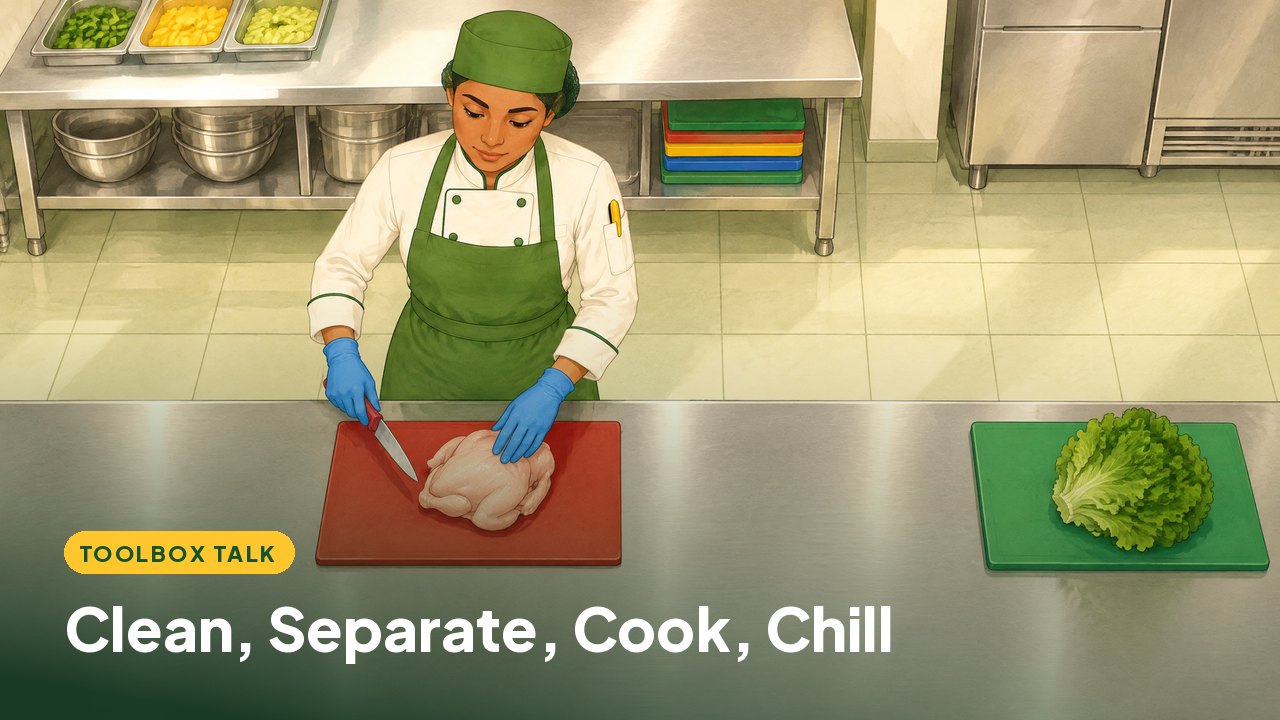 2:54
2:54Food safety
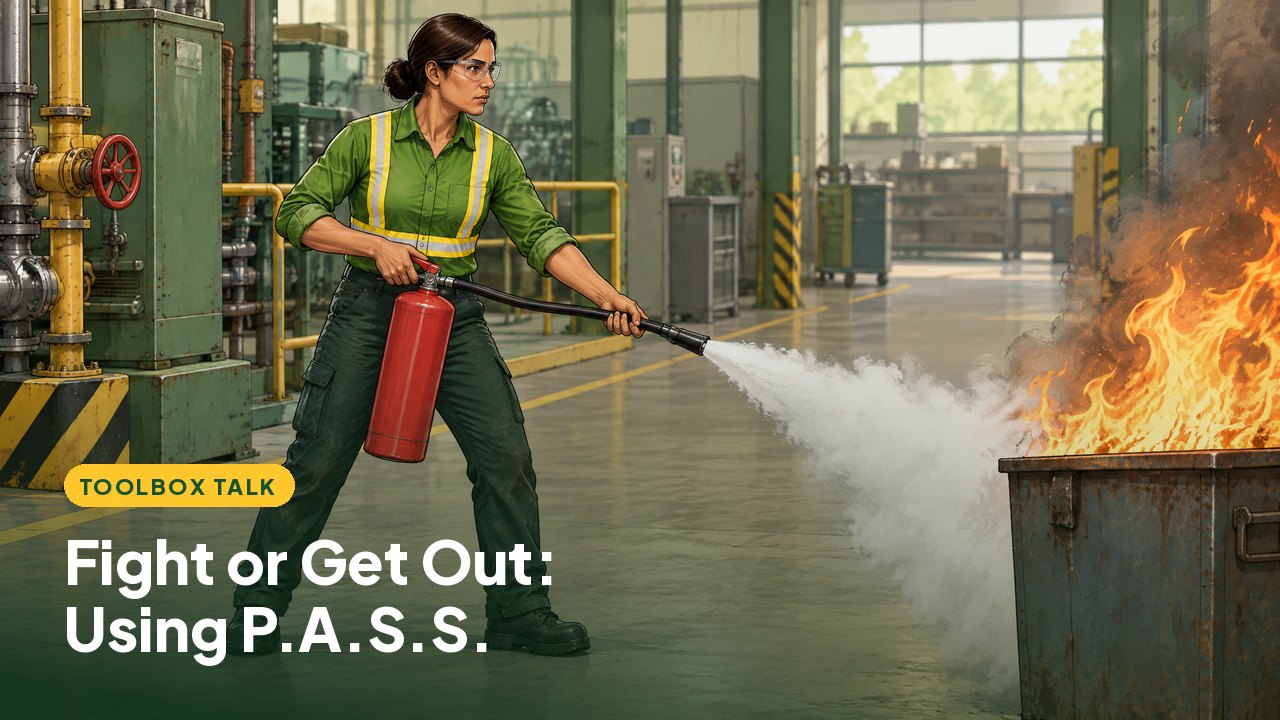 2:21
2:21Fire extinguishers (PASS)
 1:04
1:04Slips, trips and falls
Questions
How many SOPs does a restaurant need?
Usually 10 to 15 for the kitchen and 5 to 8 for front of house. Start with the ones tied to a food-safety rule: receiving, temperatures, cooling, reheating, date marking, allergens, handwashing, cleaning, sick staff. Add opening and closing, then the ones specific to your menu.
Is a restaurant SOP the same as a HACCP plan?
No. A HACCP plan identifies the hazards in your menu and the critical control points. SOPs are the procedures people follow at those points. The plan says "cook chicken to 165°F"; the SOP says how the cook checks it and what to write down.
What temperatures do I need to know?
Under the FDA Food Code: cold holding 41°F (5°C) or below; hot holding 135°F (57°C) or above; cooling from 135°F to 70°F within 2 hours and to 41°F within 6 hours total; reheating to 165°F (74°C) within 2 hours; poultry and stuffed foods cooked to 165°F, ground meat to 155°F (68°C), whole cuts and fish to 145°F (63°C). The UK and EU use 8°C (ideally 5°C) for chilled storage and 63°C for hot holding.
Can I use these SOPs as they are?
Use them as a draft. Change the unit names, the people, the log forms and any limit your local code sets differently, then have the manager and, if you have one, your food-safety consultant approve them.
Do I need a separate SOP for every dish?
No. Recipe cards cover dishes. SOPs cover the tasks around them that are the same whatever is on the menu.
Sources
Get one of your restaurant SOPs as a free video
Send one procedure. We send back a 60-second branded video with a quiz, in your crew's languages — free, no obligation.